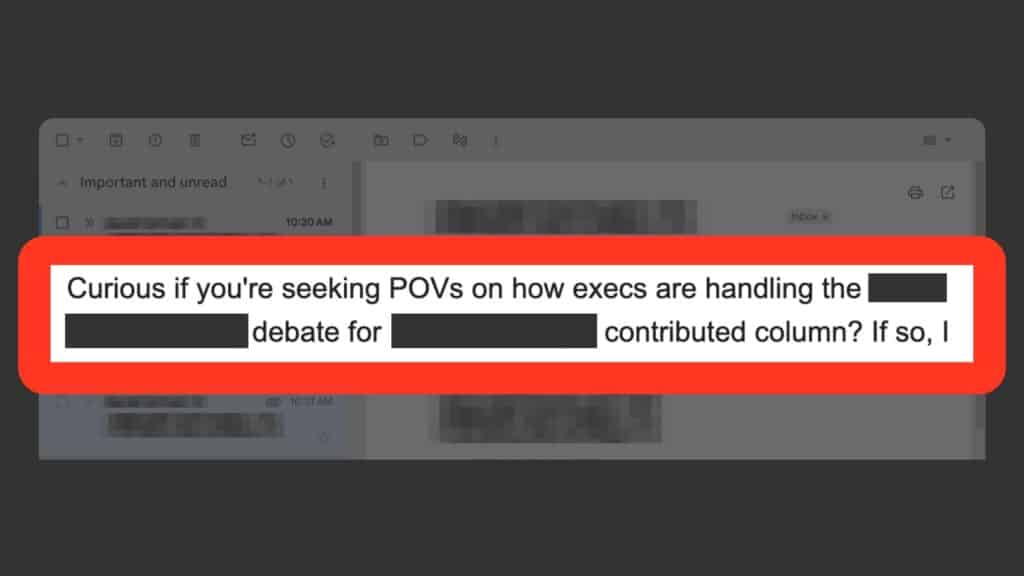
We’ve all been there: You’re on a call, and a CEO shares a strong point of view about where their industry is headed. Just as the conversation gets interesting, someone says, “We could make this an op-ed.” More and more, my response is: maybe.
Today, only a handful of publications regularly accept contributed content, and the bar for those opportunities is high, and rightfully so. Newsrooms are shrinking, and as AI-generated content becomes more commonplace, gatekeepers are upholding stricter guidelines to preserve their outlets’ journalistic integrity.
Penning an op-ed is still a valuable tactic, but putting your idea on paper doesn’t automatically make it publishable. Before you start a draft, pressure-test two things: Will this idea clear the editorial bar? And is an op-ed actually the best way to get in front of who you want to influence?
What op-eds have a shot?
As we’ve seen this bar get higher and higher, we took a closer look at what content is landing. Recent STAT First Opinion pieces, for example, pair a highly specific argument with a clear news peg and an author uniquely qualified to make it, whether that’s former public health officials weighing in on measles reporting or a pathology professor writing from his experience as both physician and cancer patient. InformationWeek’s editorial guidelines reinforce this call for clear thought leadership, explicitly prioritizing original perspectives, firsthand experience, real-world examples, and practical takeaways for IT leaders, while rejecting vendor promotion, generic industry commentary, and articles built around company research. Across publications, the pieces that landed had compelling answers to a few common questions:
- What’s the argument? A point of view isn’t necessarily an argument. The best pieces take a clear position rather than explaining a trend. “AI in healthcare needs stronger regulation” or “AI is creating new security challenges in software development” is an observation. A good op-ed will tell you exactly what needs to change and how.
- Why now? Timeliness is crucial. Creating clear urgency with your piece, whether it’s tied to what is happening in the news, policy environment, or industry, turns your POV into something that is editorially relevant.
- Why you? There was a time when having the right credentials was enough to break through the crowd. Today, that’s not enough. The credentials give you credibility, but your experience should give you a distinctive advantage to make the particular argument you’re putting forward. That can come from compelling personal experience, clinical expertise, research or policy experience, or singular visibility into an industry problem. What can you say that no one else can?
- What’s the proof? What third-party research, proprietary data, real-world implementation experience substantiates your argument? Evidence isn’t just to add color; it helps you make your case.
- And the big one: Is this still an interesting argument without your company name on it? The health tech and AI market is especially crowded, and editors hear the same claims repeatedly. Your role and experience may be exactly what gives you credibility, but the piece still needs to provide value independent of your business. If your piece relies on your product, services, or capabilities to make its case, expect an editor to scrutinize whether it’s true thought leadership or just an extension of your marketing.
If it doesn’t pass the bar, what are your options?
Just because your idea, as it stands, might not fit the editorial guidelines of your favorite publication’s opinion section doesn’t mean it’s not valuable. At this point, the question should be less about “Where can we get this published,” and more “Who are we trying to influence?” Start there to inform your approach. It’s likely highly relevant to your customers, investors, or peers; it may just need a different channel. Before shelving it, consider these options, especially if you are still on the fence about relevance. Often, your leadership position is what makes you credible to write the piece; it just doesn’t align with tough editorial guidelines. What should you do next?
- Sharpen it: Can your argument be pushed any further? Who is the villain in your story? If that’s not clear, bring it forward. What evidence makes your argument harder to refute? Then reassess if you want to pitch it.
- Shift the earned approach: A strong POV doesn’t have to be a contributed article. It could become commentary for breaking news, an interview, or a podcast conversation.
- Change the channel: Just because your idea doesn’t have a media logo on it doesn’t make it any less valuable. A LinkedIn post puts your timely POV in front of an existing network, and you can drive immediate connection and engagement. Publishing on your company blog gives you more room for depth, plus additional SEO and AEO value.
Don’t force the op-ed
Op-eds aren’t dead. But with limited opportunities and high editorial standards, communications teams need to be realistic about what deserves that treatment. Our job isn’t to find just anywhere that will publish 800 words. It’s to determine whether the idea can clear the bar, and if not, what needs to change. The goal of any thought leadership program shouldn’t be to land a byline. It should ensure your differentiated, valuable idea reaches the people who need to hear it.