PR professionals love a good fake holiday, an opportunity to insert our tech clients’ hot takes into everything from Data Privacy Day (January 28th) to System Administrator Appreciation Day (July 28; there’s not too much time to get your shopping done for the special SA in your life). Heck, 15 years ago, I helped create Data Stewards’ Day (celebrating the “moderately-sung” heroes who steward data) for SAS (which I am told by a former colleague didn’t really stick).
And I will admit, we may oversell their value to our clients, although ultimately I imagine they know the deal.
All that to say, I want to have a conversation about AI Appreciation Day.
The conversation on AI has changed dramatically in the past year. In previous years, a holiday for our robot overlords seemed like a harmless lark. It feels very different now:
- Half of U.S. adults say AI’s growing role in daily life makes them more concerned than excited, while only 10% feel more excited than concerned.
- 56% are extremely or very concerned that AI will eliminate jobs, and 57% worry it will weaken human connection.
- 50 percent of my Gen-Z sons get angry when I talk about AI.
- General fears about AI have become increasingly intertwined with data center hate, as my colleague, Orchestra Partner and veteran political strategist David Plouffe said at an event in May: “Data centers have become a physical symbol for broader anxieties about AI, from rising electricity costs and environmental impact to questions about long-term job creation.”
Yet this is a nuanced conversation. There’s no denying the positive (and very human-centric!) outcomes AI is creating for some of our most critical industries. In healthcare, we’re seeing accelerated research and improved diagnostics, paving the way for more proactive, preventative care. For the manufacturing sector, AI is reducing worker exposure to unsafe conditions and bringing new economic opportunities through domestic investment.
In an industry like public relations, outcomes may not feel as prevalent, but AI can help with administrative or redundant tasks, giving us time to be more strategic for our clients. At Inkhouse, we have a fairly clear-eyed framework for all of this: AI doesn’t lead the work. The judgment, relationships, and strategy stay with us, the humans.
So I am all for giving AI the appropriate level of appreciation it deserves, even if it’s for a made-up holiday. But more importantly, I want to give the human touch even more celebration. And I have asked a number of my savvy colleagues to weigh in on being human in an AI world as well.
Sending pitches
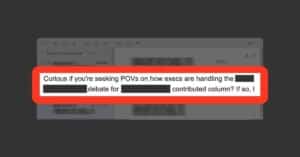
Everyone’s inbox is a mess. We’ve all gotten an email where our name is misspelled, it’s not relevant to what kind of work we do, or clearly sounds automated. In a world full of AI-generated emails, we’re all craving messages that feel genuine. Adding personal touches to your pitches is the biggest key to breaking through with media. Here are a few great ways to write a pitch that genuinely feels human:
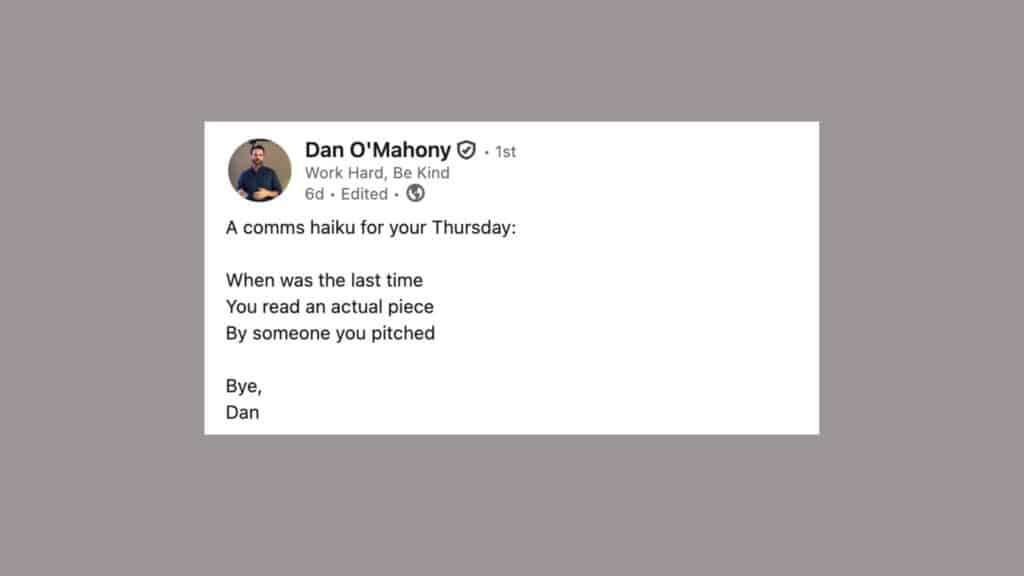
- Follow people on LinkedIn. Really follow them! Read their posts, engage with their stories, learn what excites them. You’ll be surprised how much you learn. Those learnings become great fodder for writing a strong, personalized pitch.
- There is no “ideal” format. Use bullets, send a two-sentence note, add an emoji, crack a joke – pitching is an art, not a science.
- Be yourself. Don’t try to give your pitch a voice that isn’t true to you. Casual language has a place in our inbox as long as the ethos of the message and that we truly have done our research shines through.
At the end of the day, offering someone the opportunity to connect on a human level will always surpass drafting a “perfect” email. Real connection is messy and imperfect, but long-lasting. Maybe your pitch won’t turn into a story opportunity this time, but making someone feel seen and understood will pay off in the long run.
– Sam Elliott, Manager of Media Strategy
Posting on social
“As AI-generated content proliferates across the web, sounding human has never been more important. There are familiar patterns to watch for: “It’s not X, it’s Y” framing, excessive em dashes, and perfectly structured three-part lists (wink wink). But the most important thing is to leave the quirks in.
Strong writing should still be polished, but a human voice often lives in the unexpected choices that clearly came from a person. As the perfection of AI continues to spread, the rough edges of human writing can’t be replaced.”
– Kyle Treasure, Manager of Social Media Strategy
Writing content
“AI has certainly become a valuable tool in parts of the content creation process, but the best writing still starts with a person who has something meaningful to say. Every author brings a unique perspective and voice shaped by their experiences, conversations, instincts, and curiosity. Those are the qualities that AI can’t replicate and that make an idea resonate long after someone finishes reading. On AI Appreciation Day, I’m appreciating the technology while also recognizing that the authentic human touch has never been more valuable in creating impactful content.”
– Kaley Carpenter Smith, Director of Content Strategy
Do you want a comms team that deeply understands the implications and opportunities of AI while prioritizing human relationships above all else? Work with us.