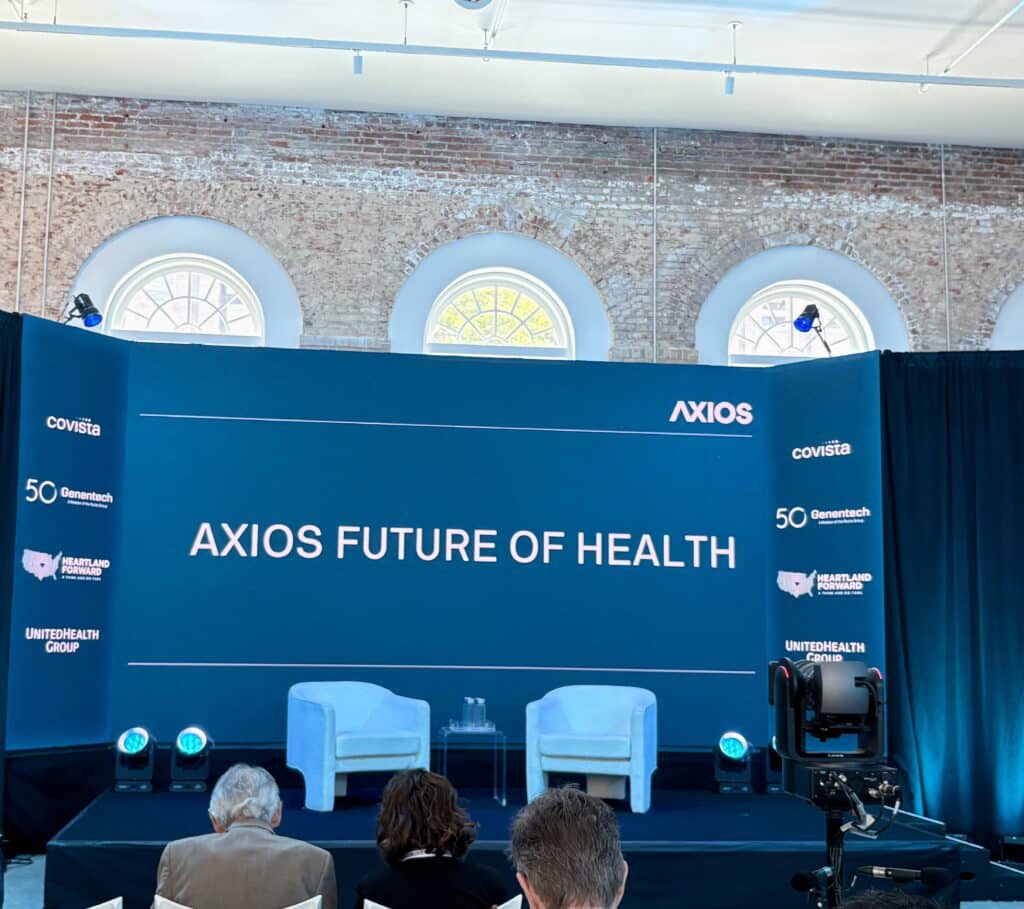
At the Axios Future of Health Summit in Washington, D.C., policymakers, healthcare executives, and innovators converged around one central reality: healthcare is entering a new era defined by pressure, personalization, and public scrutiny.
From the Administrator of the US Centers for Medicare and Medicaid Services, Dr. Mehmet Oz’s push to overhaul prior authorization to renewed debate over drug pricing, maternal health, and AI-powered prevention, the event underscored how quickly things are changing for the industry, and the growing imperative for communications leaders to evolve with it.
Here are four trends healthcare communicators and brands should be paying close attention to:
1. Healthcare affordability is now a conversation about trust
Drug pricing dominated conversations throughout the event, with lawmakers, pharma leaders, and regulators acknowledging the growing public frustration with healthcare costs.
Senator Peter Welch (D-VT) argued that the U.S. healthcare system is fundamentally unsustainable, citing the disconnect between high spending and poor outcomes. Meanwhile, PhRMA CEO Stephen Ubl and Bristol Myers Squibb CEO Chris Boerner defended innovation while emphasizing the need for more predictable regulation and global burden-sharing.
Direct-to-consumer healthcare models continue gaining traction as consumers grow frustrated with traditional healthcare access, signaling that patients no longer separate affordability from quality of care.
Scrutiny is only going to intensify, and healthcare companies, particularly pharma, insurers, and provider systems, need to communicate with empathy and clarity rather than defensiveness. This means explaining pricing and access clearly, demonstrating patient value in concrete terms, proactively addressing friction points, and translating policy complexity into patient-centered language.
2. Prevention and continuous health monitoring are becoming the new healthcare frontier
A theme from last year’s HLTH conference was also prominent, with wearables and health-tech companies painting a future where healthcare becomes increasingly proactive rather than reactive.
WHOOP’s Emily Capodilupo described a future in which healthcare intervenes “long before you ever get sick,” pointing to the company’s integration of wearable and diagnostic data through its partnership with Quest Diagnostics. CLEAR CEO Caryn Seidman-Becker discussed how to bring seamless identity verification and interoperability into healthcare settings. Meanwhile, NextSense showcased wearable audio technology designed to support sleep, stress, and mental wellness.
It’s becoming clearer that healthcare is moving from episodic care toward continuous monitoring and behavioral intervention. Brands are no longer just competing on clinical outcomes; they’re competing on experience, usability, and engagement.
But despite the opportunities around empowerment and prevention, and the ability to take a personalized health journey through data-driven wellness, it also raises important messaging considerations around privacy, trust, and accessibility. Companies introducing AI and monitoring tools will need to clearly articulate how data is used, protected, and translated into meaningful outcomes.
3. Healthcare’s next innovation battleground may be fraud, verification, and system integrity
Fraud and trust used to sit largely in compliance conversations. Now, they are increasingly public-facing brand issues as patients grow increasingly worried about data security and identity protection, billing transparency, AI governance, and more.
CMS Administrator Dr. Mehmet Oz framed fraud reduction as foundational to fixing broader healthcare inefficiencies, citing hospice payment abuses and prior authorization reform as key areas for oversight. CLEAR CEO Caryn Seidman-Becker similarly argued that identity verification and interoperability are becoming essential infrastructure for modern healthcare experiences.
Meanwhile, HRSA Administrator Tom Engels emphasized rebuilding public trust in the nation’s organ transplant system through modernization efforts, new oversight mechanisms, and improved transparency.
4. The healthcare workforce crisis is impossible to ignore
Workforce shortages are urgent. Executives pointed to severe shortages across primary care, rural healthcare, and medical education. Scott Liles, President of Medical and Veterinary at Covista, warned that the U.S. lacks the training capacity needed to meet future demand, while HRSA officials highlighted mounting strain on community health centers nationwide.
Maternal healthcare advocates also emphasized expanding the workforce through midwives and birth workers as part of broader solutions to improve outcomes.
Healthcare workforce conversations are evolving from HR issues into business, policy, and reputational issues, and audiences increasingly expect healthcare organizations to acknowledge workforce strain honestly rather than gloss over operational challenges. Organizations should prioritize their communication strategies to focus on workforce investment, burnout reduction, support for underserved communities, and innovation in recruitment and retention.
Modern Healthcare Demands Modern Communications
The conversations at Axios Future of Health reflected an industry under pressure to modernize while rebuilding trust with patients, providers, regulators, and consumers. As AI adoption accelerates and scrutiny around cost, access, and accountability intensifies, communicators will increasingly serve as the bridge between innovation and public understanding.
The organizations that succeed won’t simply have the strongest technology or policy positions. They’ll be the ones who communicate their value clearly, transparently, and humanely.